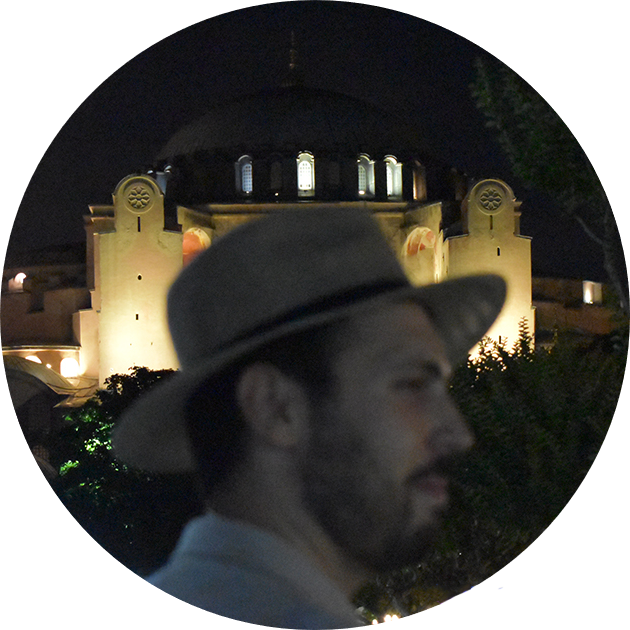
Traveling to Istanbul is always an adventure. Over the years, I’ve welcomed guests from Switzerland on bicycles, their eyes shining with excitement. I’ve also seen others arrive on motorbikes, and I love witnessing such bold, personal explorations. But one story stands apart: the incredible March 1891 journey of Thomas Allen and William Sachtleben. This tale—Two Americans’ Istanbul Journey—is about bravery, curiosity, and unyielding adventure. They were trailblazers, exploring firsthand without guides or luxury, relying on resourcefulness and a revolutionary “safety bicycle.” They even photographed Istanbul, letting us glimpse the city through their 1891 lens.

Who Are These Bikers?
Just a day after graduating from Washington University in St. Louis on June 14, 1890, Thomas Allen and William Sachtleben set off on an extraordinary journey around the world, covering 15,000 miles. Their goal was more than travel—they sought hands-on experience to enhance their education.
They faced tough living conditions, unwelcoming authorities, and unpredictable landscapes. Yet they pressed on with determination, enduring minor complaints and constant hurdles, including offers of armed guards, which they refused to keep their adventure free-spirited.
Their bicycle, a groundbreaking invention with two equal-sized wheels, a chain-driven rear wheel, and inflatable tires, became their loyal companion. They called it a “little mule that you drive by the ears,” showcasing its value to the world. Even the 300 million bicycles in China owe part of their existence to these pioneering travelers.
Allen and Sachtleben drew inspiration from Thomas Stevens, whose 1887–88 journey “Around the World on a Bicycle” sparked imaginations but forced him south through India due to legal and visa restrictions. The Americans, however, boldly traversed nearly lawless regions of Russia and China, where danger and political tension were constant.
Their trek from Istanbul, then the political center of the Near East, to Peking, the capital of the Far East, spanned 7,000 miles through some of the most thrilling and treacherous terrain of Two Americans’ Istanbul Journey.

After the Ride: The Lives of Thomas Allen and William Sachtleben
Thomas Gaskell Allen, Jr.
After his journey, Allen joined the lecture circuit for Major Pond in New York City. He also traveled to Russia as a correspondent, documenting the construction of the Trans-Siberian Railroad.
Eventually, he settled in Britain, married Annie Mackay, and became a British citizen. He made significant contributions to practical inventions, including a water pump, a carbide lamp, and a front-wheel braking system for cars.
Allen co-founded Allen-Liversidge Limited, now part of The BOC Group, and was elected a Fellow of the Royal Geographical Society.
His 1890 Humber Safety bicycle, a key part of Two Americans’ Istanbul Journey, became a museum piece. Donated to the Science Museum in 1927, it still resides there today. Its frame, repaired with iron bars and telegraph wire, remains a silent testament to the adventurous journey it once undertook across Asia.

William Lewis Sachtleben
Sachtleben’s adventures after the journey were just as thrilling. In 1895, he returned to the Middle East to investigate the mysterious disappearance of cyclist Frank G. Lenz, standing at the site of Lenz’s tragic end.
In 1900, he traveled north to Cape Nome, Alaska, tried prospecting, and sent reports to newspapers. Although mistakenly reported dead in 1897, he lived until December 13, 1953, passing away in Fort Lauderdale, Florida. His varied career included managing the Majestic Theater in Houston, Texas.
Together, the lives of Allen and Sachtleben reflect a spirit of curiosity, bravery, and determination. Their story, known as Two Americans’ Istanbul Journey, reminds us that the world is meant to be explored with eyes wide open and hearts unafraid.
Crossing into Asia: Thomas Allen and William Sachtleben in Istanbul

Their adventure into Asia began on March 21, 1891. In the early morning, a small steamer carried them from Istanbul to the wharf at Raider Pasha, the gateway to the continent.
They wheeled their bicycles across the gangplank through a crowd of Greeks, Armenians, Turks, and Italians. This marked the start of a remarkable 7,000-mile trek from the Bosporus to the Pacific.
With morning fog over the Golden Horn, the stars and stripes waved farewell to two young Americans leaving the comforts of Western civilization behind.
Their first guide, a twelve-year-old Armenian boy, grasped their hands and said, “I hope God will take care of you.” His words warned of bandits along the way, a reminder of the challenges ahead on Two Americans’ Istanbul Journey.
Here is an article I wrote recently entitled ‘Blue Mosque vs. Hagia Sophia: Which One Should You Prioritize?’
Planning a Journey Across Asia

The journey was designed as a hands-on way to complete their studies. Their bicycles gave them freedom to explore without guides or safe havens.
Their plan was bold: to venture deep into the heart of Asia rather than follow safer coastal routes.
They prepared carefully. Letters from the Russian minister guaranteed passage, while the Chinese legation issued cautious passports, warning about lawless groups and wary locals.
Armed with documents, courage, and their trusty bicycles, they were ready for any challenge that lay ahead on Two Americans’ Istanbul Journey.
Cycling to Izmit: Roads, Rivers, and Railways
The journey to Izmit, ancient Nicomedia, tested their resilience. Wagon roads and military highways were often in poor condition, forcing them to navigate rough terrain.
Along the Gulf of Izmit, they faced steep cliffs and dark tunnels. Slow-moving camel caravans were gradually replaced by locomotives, signaling Asia Minor’s march toward modernization.
Authorities required them to be accompanied by mounted guards, called zaptiehs. These guards sometimes caused chaos, pushing the Americans along and disturbing animals and caravans.
Despite being a nuisance at times, the guards were essential. They helped with river crossings and ensured safety during Two Americans’ Istanbul Journey.

On Historic Ground: From Ankara Goats to Ancient Battlefields
By April 12, 1891, they reached the stunning plateau of Ankara. Spring pastures stretched like a green carpet, dotted with Ankara goats and fat-tailed karamanli sheep, watched over by nomadic Yurak shepherds and their half-wild collies.
Ever cautious, the Americans carried revolvers for self-defense—a reminder that adventure often comes with danger.
They rode through a land rich in history. Near the Owas River lay Istanas, legendary home of King Midas, where Alexander the Great sliced the Gordian Knot and Timur faced Bayezid I.
Their journey was more than a trek across the landscape; it was a passage through time. Every hill and valley whispered stories of the past on Two Americans’ Istanbul Journey.

When the “Devil’s Carts” Invaded Kırşehir
When they arrived in Kırşehir, the locals were captivated by the two Americans and their quirky “devil’s carts.” Horsemen challenged them to races, and crowds shouted, “Bin! Bin!” (“Ride! Ride!”). By the time they reached the khan, the crowd had grown nearly into a mob.
Inside, curiosity didn’t fade. Townspeople inspected their clothes, hair, faces, fountain pen, camera, and especially their map of Asiatic Turkey. Allen and Sachtleben explained their journey and the concept of traveling “around the world.” The locals, wide-eyed, repeated, “Around the world…?”
Relief came when Osman Beg, a European-educated Albanian Greek and cousin of the Angora Vali, invited them to dinner. He served sweet and sour dishes with traditional Turkish music, offering a warm taste of local hospitality.
Back at the crowded, smoky khan, games and loiterers made rest impossible. Yet the lively chaos captured the humor, curiosity, and spirit of Anatolian towns, setting the stage for Two Americans’ Istanbul Journey across Asia.

Conclusion: A Legacy of Courage and Curiosity
Allen and Sachtleben were more than just adventurers—they were true pioneers. Their incredible journey through Istanbul and into Asia showcases the remarkable blend of courage, curiosity, and adaptability. They explored uncharted territories, honored local traditions, and faced challenges with creativity and resourcefulness. Their tale serves as a powerful reminder that travel is not merely about reaching destinations; it’s about embracing the unknown, stepping outside of our comfort zones, and allowing the world to challenge and transform us, one pedal stroke at a time.
If you would like to learn more interesting details about Istanbul, I recommend reading my article titled 100 Interesting Facts About Istanbul. Written by a professional tour guide (historian) who was born and raised in Istanbul, don’t forget to follow my social media accounts and website for more authentic stories about Istanbul.
The photographs have been taken from the following source:
You can find the full story here:
Across Asia on a bicycle : the journey of two American students from Constantinople to Peking