Undoubtedly, the Basilica Cistern is one of the most sought-after attractions among Istanbul’s tourist sites. However, online sources providing basic information about this famous landmark are rather limited. For this reason, I have conducted a comprehensive study on the origin of its name and certain architectural features you won’t find anywhere else, and I have recounted biography of Medusa based on the oldest and most complete myth. As a result of my work as a tour guide and historian, I present to you ‘Basilica Cistern: Name Origin, Architecture & Medusa’. Come, let me take you on this journey.
Origin of the Basilica Name
The name of the Basilica (Yerebatan) Cistern is directly connected to a structure that once stood above it—an imperial colonnaded gallery known in architectural terms as a stoa. This structure was referred to as “Basileios”, meaning “Imperial”.
In ancient Greek architecture, stoas were long, covered colonnaded spaces typically built alongside streets or agoras. They functioned as public hubs, used for administrative, commercial, and social activities. The presence of such an important imperial stoa above the cistern is what ultimately gave the structure its modern name.
Contrary to common belief, the term “Basilica Cistern” has no connection to a church building. Instead, it refers entirely to this Imperial (Basileios) Stoa. In fact, the cistern was not known by this name during its construction period. The name developed much later, as a historical reference to the imperial structure that once occupied the site above.
Brief History of the Basilica Cistern
The Basilica Cistern, the largest covered cistern of Constantinople (of the 138 cisterns in total), was commissioned by Emperor Justinian in the 6th century AD to supply water to nearby imperial buildings, baths, and residences through aqueducts and rainwater collection.
Although construction likely began around 527–528, it is believed to have been completed in the second half of the 6th century, possibly after the destruction caused by the Nika Revolt in 532.
Rather than serving as a constant water source, the cistern functioned as a strategic reservoir—storing excess water for use during Istanbul’s dry summer months.
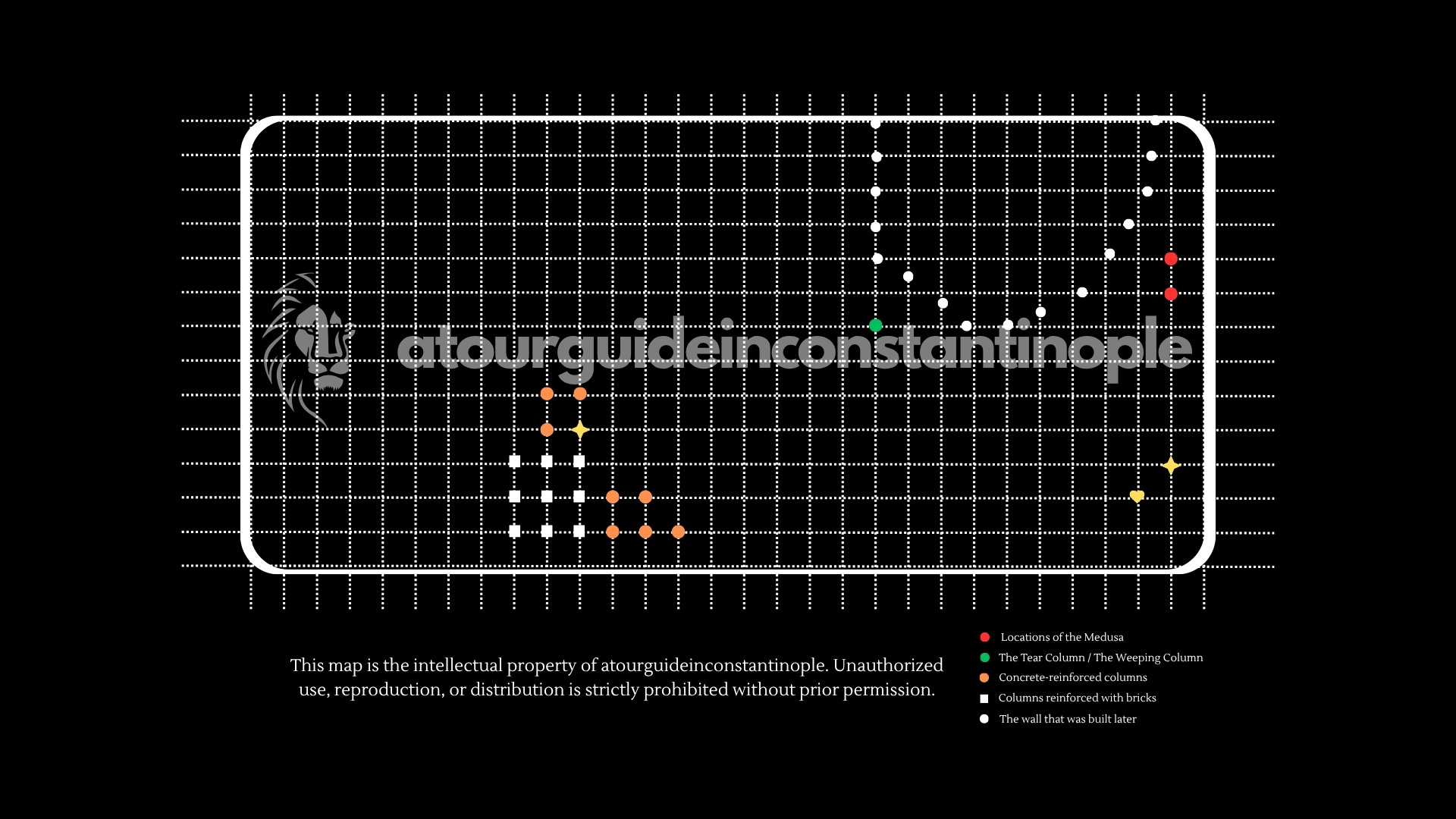
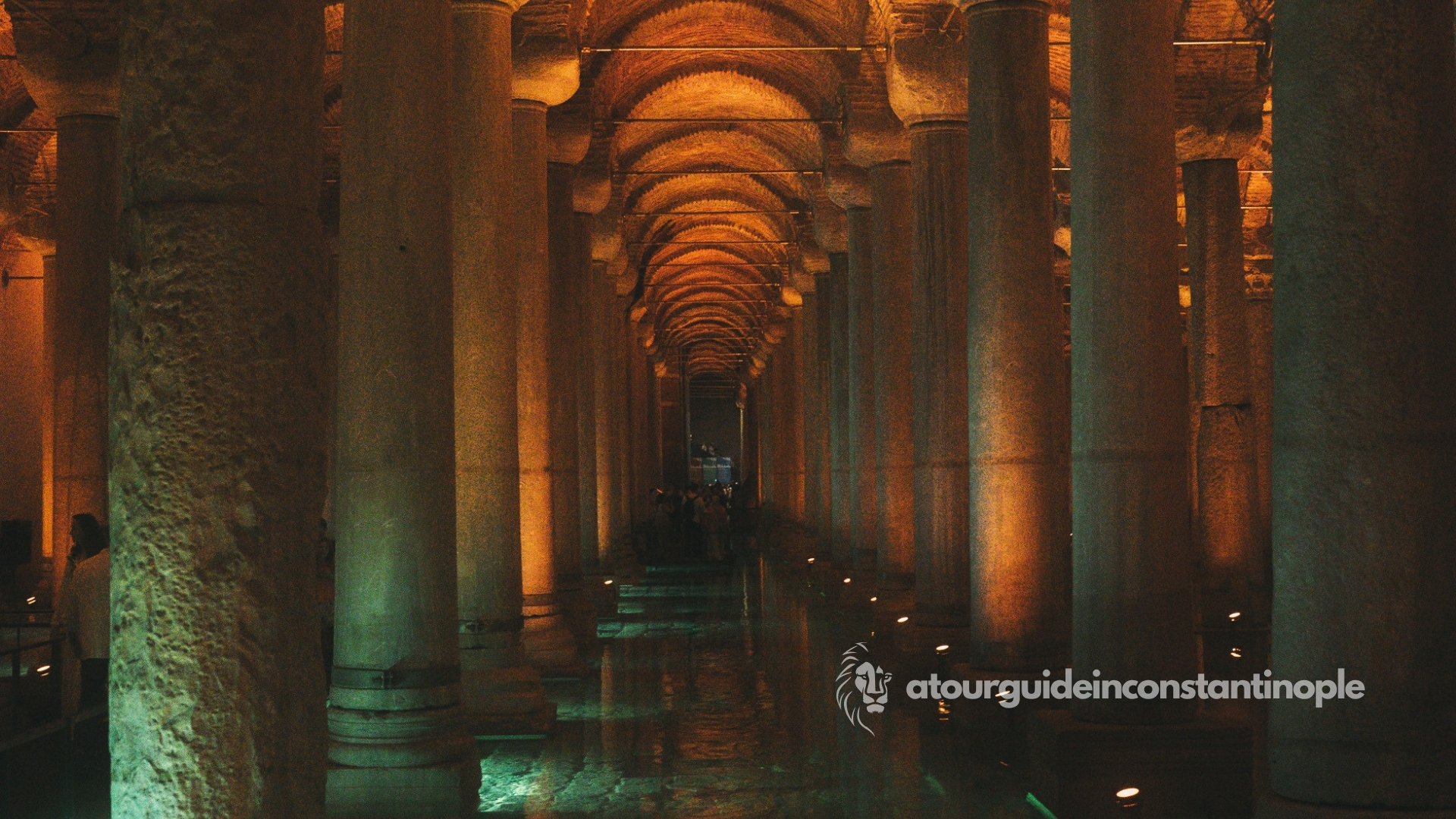
Covering approximately 9,800 m² with a capacity of 100,000 m³ (3,531,466.7 cu ft), the structure features 336 columns (Forty-one of these columns are not visible as they are hidden behind an additional wall built later) and showcases extensive use of reused materials (spolia), reflecting a blend of architectural styles from different periods.
Medusa
The earliest and most detailed account of Medusa appears in Apollodorus’ work Bibliotheka. The story is told through the mission of Perseus, who was sent to bring back the head of the Gorgon.
King Polydectes gathered his guests under the pretense of collecting wedding gifts. Perseus boldly declared that he could even bring the head of the Gorgon. Taking advantage of this, Polydectes ordered him to do exactly that.
Guided by Hermes and Athena, Perseus first visited the daughters of Phorcus. These were Enyo, Pemphredo, and Deino. They were born old and shared a single eye and a single tooth. Perseus seized both and refused to return them until they revealed the path to the nymphs.
The nymphs possessed essential items. These included winged sandals, a special bag called the kibisis, and the helmet of Hades. The bag was used to carry objects such as food and clothing. The helmet granted invisibility.
Equipped with these tools, Perseus set out toward the Gorgons. He also carried an adamantine sickle given by Hermes. The Gorgons were three sisters: Stheno, Euryale, and Medusa. Among them, only Medusa was mortal.
The Nature of the Gorgons
The Gorgons were terrifying beings. Snakes covered their heads. Their bodies were described with bronze hands and golden wings. Their gaze had a deadly power. Anyone who looked directly at them would turn into stone.
The Death of Medusa
Perseus found the Gorgons asleep. To avoid their deadly gaze, he did not look at Medusa directly. Instead, he used the reflection on his bronze shield. Guided by Athena, he carefully approached and cut off Medusa’s head.
At the moment her head was severed, two beings emerged from her body. One was Pegasus, the winged horse. The other was Chrysaor. Both were children of Poseidon.
Aftermath
Perseus placed Medusa’s head into the kibisis. The remaining Gorgons awoke and pursued him. However, they could not see him. The helmet of Hades concealed him completely. Using this advantage, Perseus escaped safely.
Key Points to Know
- Medusa was the only mortal among the Gorgons.
- Her gaze could turn people into stone.
- Perseus avoided her gaze by using reflection.
- Pegasus was born at the moment of her death.
- Her head remained powerful even after being cut.
Where to Find Medusa in the Basilica Cistern
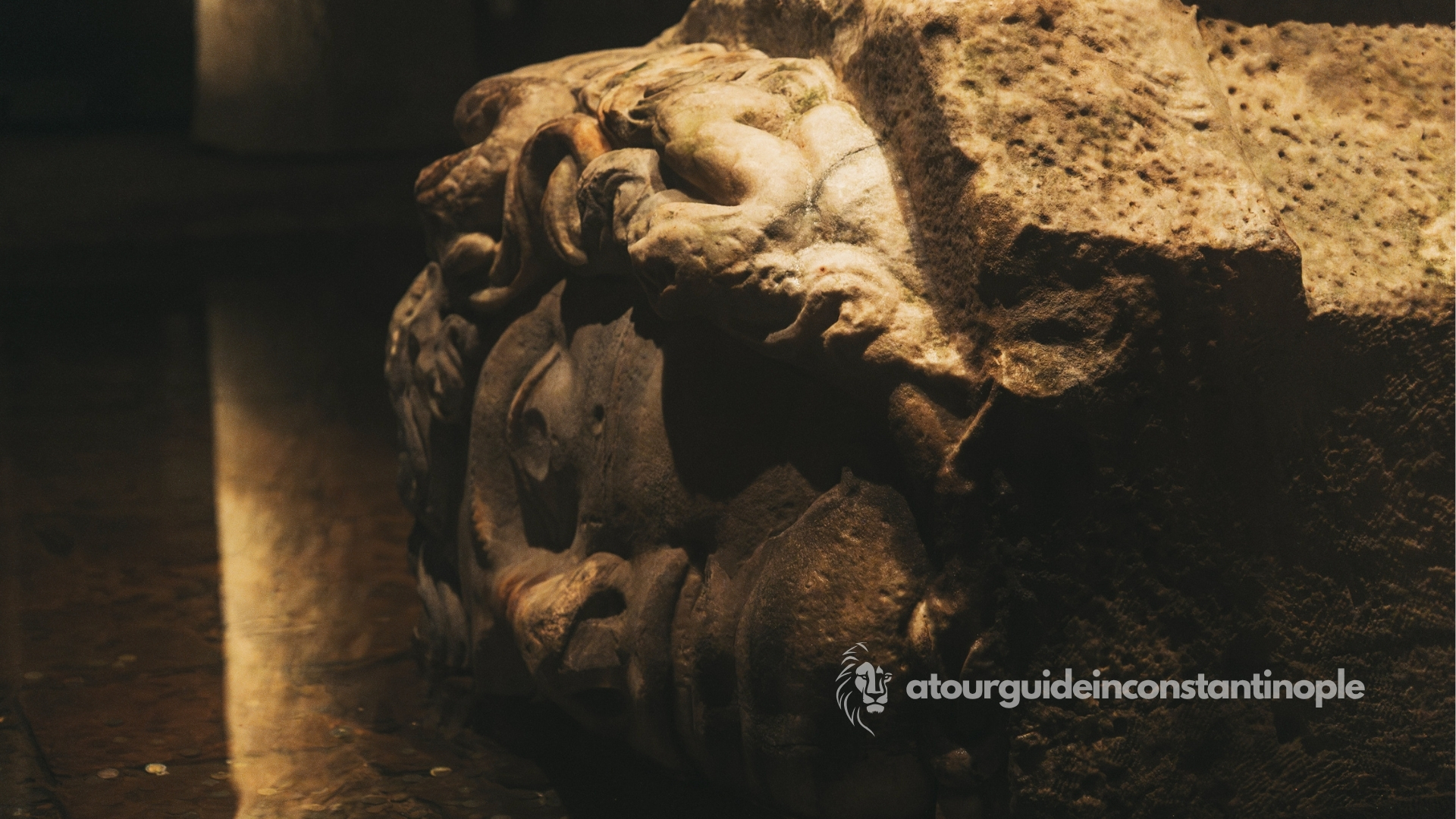
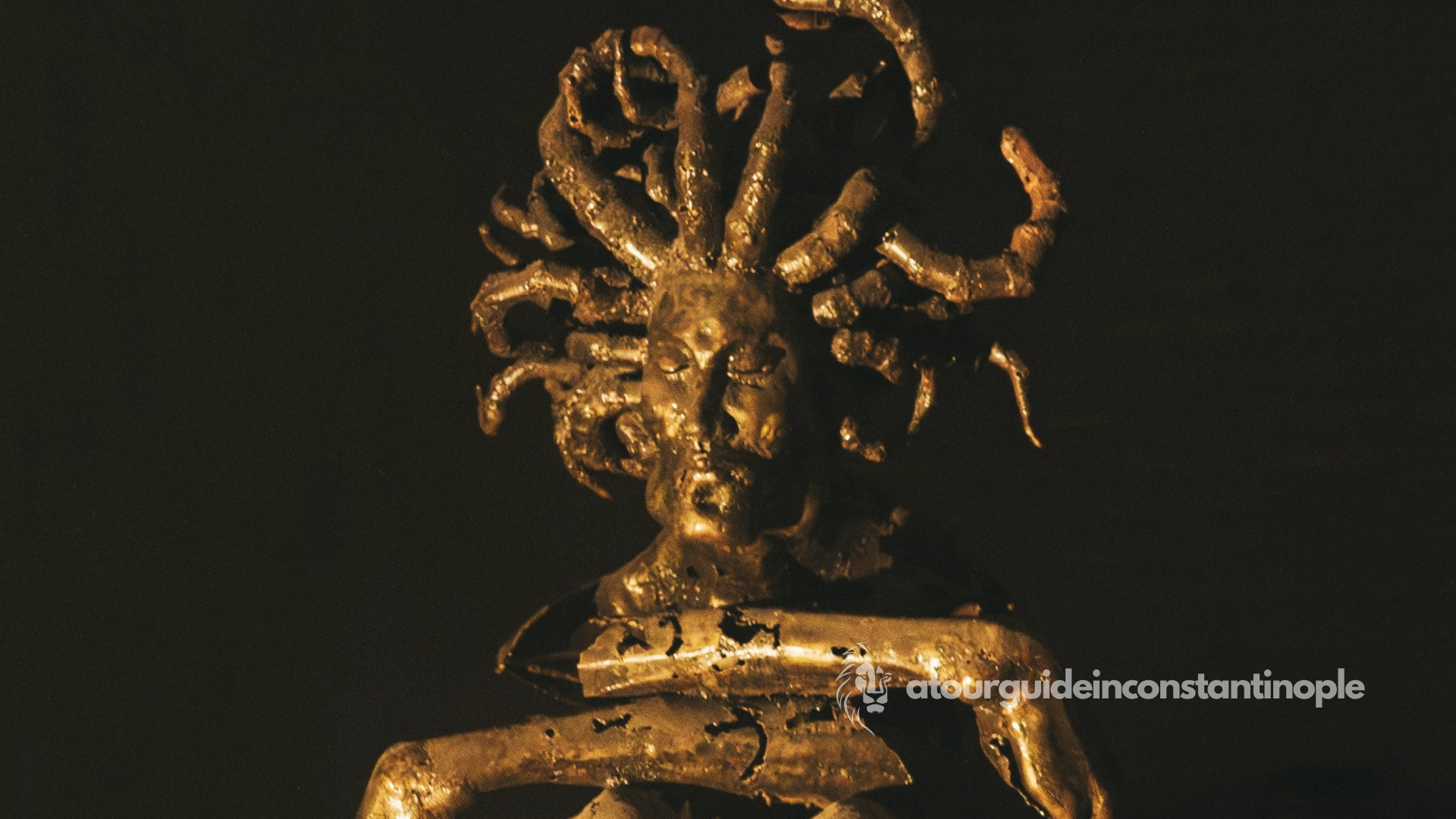
There are only two Medusa heads inside the cistern. One is placed upside down. The other is placed on its side. No one knew of them until it was reported that they had been discovered beneath the mud during restoration work in 1986.
These two structural elements are often described as identical. However, a careful look shows that their facial expressions are not the same.
You can locate them by following a simple route after entering the Basilica Cistern. First, complete your ticketing and entry process. Then descend the stairs into the cistern.
After entering, follow the one-way walking path forward. Turn first right, then left. Continue walking until you reach the far end wall of the cistern.
When you turn left again, you will notice a shadow created by modern lighting. This light comes from the Medusa-themed art installation.
Both Medusa heads are located in that corner. They will be on your lower left side. You can also use visitor concentration as a clue, since many people gather around this area.
Map of the Basilica Cistern
This map was created by atourguideinconstantinople. It is not permitted to use without permission. If permission is granted, the map must be linked back to this page whenever it is used.
Quote From Procopius, 6th Century Historian
Now I will tell what the emperor did to provide the city with an abundant supply of water. In summer, the imperial city suffered from a shortage of water; in other seasons, however, water was sufficiently available. Indeed, in summer there is always a shortage of water — the sources being less generous than in other seasons, less water is carried to the city. For this reason the Emperor thought as follows: in the imperial stoa (porticus), where advocates, litigants, and others involved in such matters prepare their cases, there is a very long and very wide courtyard, surrounded on four sides by columns; the foundations of the building rest not on earth but on rock. Four colonnaded stoas surround the courtyard. Emperor Justinian ordered that the stoa facing south be excavated to a great depth, and there he had constructed a suitable water reservoir, where water that was wasted in seasons other than summer would be collected for use in summer. These cisterns were built to hold the waters flowing from the aqueduct, and thus both to collect it when water was plentiful and to distribute it to those in need when water diminished. In this way, Justinian provided the people of Byzantium with drinking water.
The Tear Column / The Weeping Column
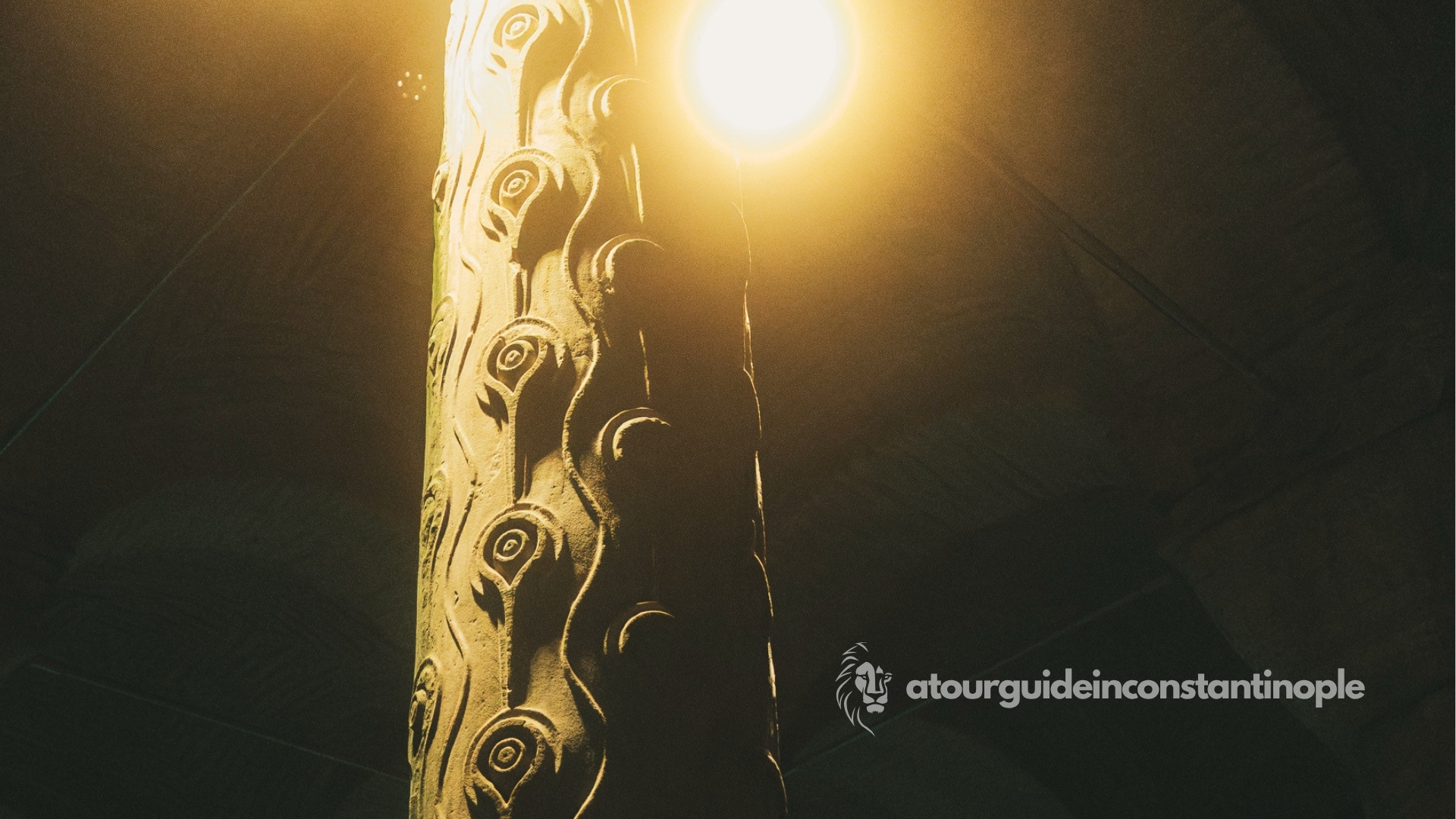
There is one column shaft made of green marble, popularly known as the “Tear Column.” It features decorative patterns described as knots, water drops, or a tree trunk motif.
This column closely resembles others found today in Beyazıt Square and in the garden of the Istanbul Archaeology Museum. In terms of style, it stands out as one of the most decorative structural elements of the cistern.
The column is stylized in the form of a tree trunk. The motifs on it appear like tear drops, even though they are arranged in an upward direction. Because of this resemblance, it has been given the name “Tear Column.”
In reality, I do not think it has any connection to actual tears or to the story that associates it with slaves who died during construction.
Considering the construction process of the cistern, materials must have been reused from at least 10 to 13 different structures. For a project of this scale, such a clean and solid column could only represent tears of joy.
The value of building materials at that time was immeasurable.
Basilica Cistern Photo Gallery
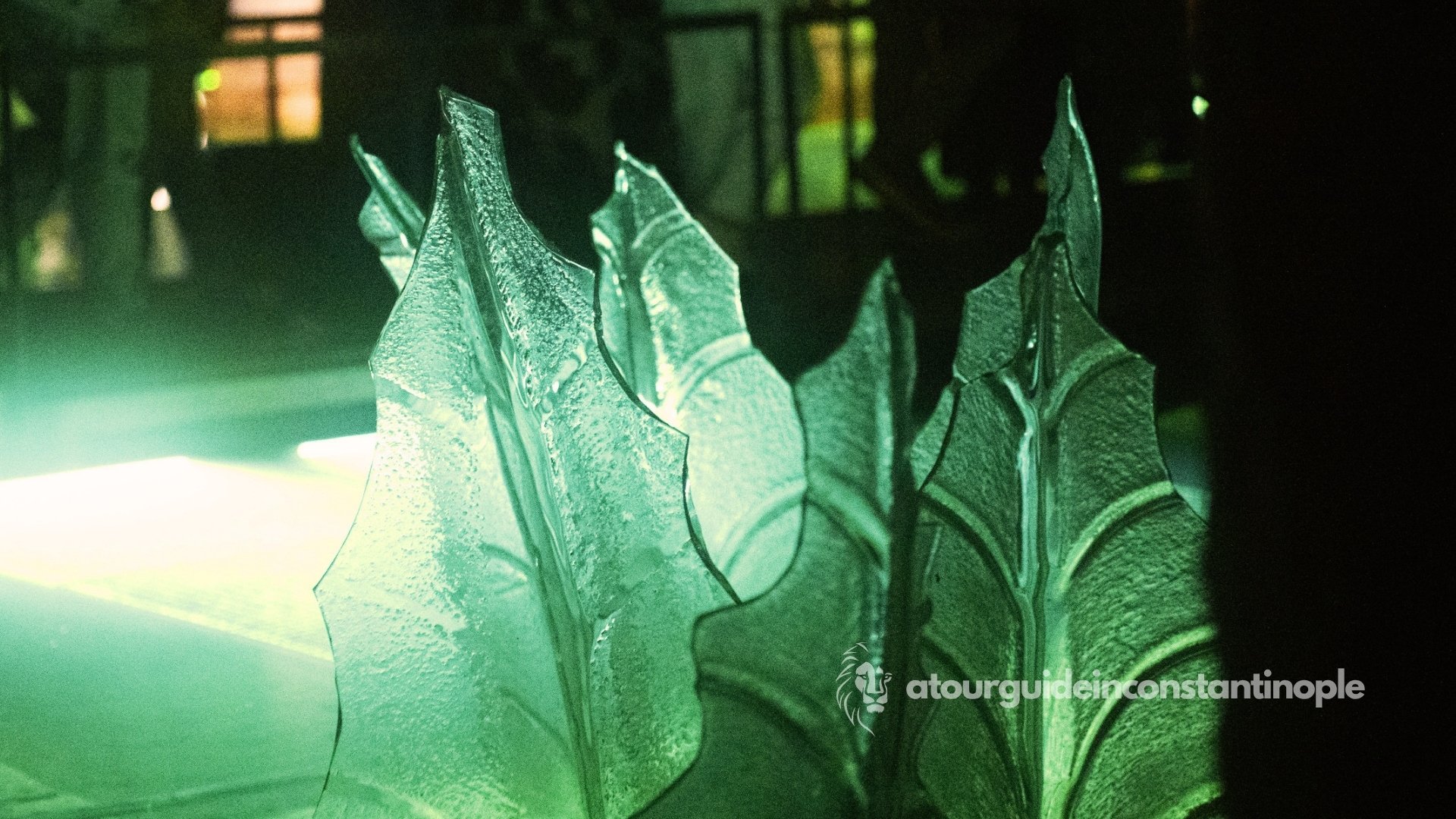
These photos are taken by atourguideinconstantinople. They show Medusa’s placement, atmosphere, and architectural context inside the Basilica Cistern.
Click on any image to view it in full-screen gallery mode.
Experience the Basilica Cistern with a Real Guide
Don’t just walk through the Basilica Cistern—understand it. Join a small group led by a professional local guide and uncover the hidden stories, symbols, and history most visitors completely miss.
View Tour Details & AvailabilityDiscover the Real Istanbul
Go beyond the guidebooks. Explore insider stories, hidden corners, and real local insights—shared by a professional Istanbul tour guide who lives the city every day.
Explore Insider Stories